
Online University Degree - Hepatobiliary and Gastrointestinal Imaging
Résumé de la formation
- Type de diplôme: Diplôme d'université
- Domaine: Sciences, Technologies, Santé
Présentation
Présentation
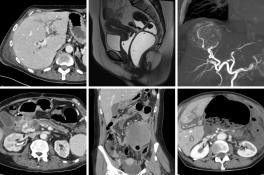 This program aims to provide advanced subspecialty training in hepatobiliary and gastrointestinal imaging at an expert level.
The program is delivered exclusively online. It includes recorded lectures in various formats (traditional lectures, clinical cases, and guidelines). Each lecture is accompanied by a clinical case with questions ensuring continuous assessment. At the end of each module, a live clinical case session is organized to allow interaction with the experts. Continuous assessment and the final examination are also conducted online.
The program is delivered by leading specialists in digestive imaging from numerous universities and institutions. Forums enable communication with the faculty and the instructional coordinator, who ensures the smooth running of the DIU.
This program is entirely conducted in English. To apply for the French version, please click here
Objectives:
- Advanced-level training (expert level subspecialty) in abdominal and gastrointestinal imaging.
- In-depth development of knowledge in diagnostic and interventional abdominal and gastrointestinal imaging.
- Acquisition of strategies and prioritization of the different imaging modalities in practical clinical situations.
Learning mode and assessment :
- Duration : 56 hours (+ online exam 1,5 hours + 5 hours interactive sessions)
- Schedule :
Applications : From May 1 to July 10 2026
Course : September 2026 to June 2027 - Remote learning : lectures, clinical cases and live sessions with experts
- Continuous assessment (30% of the final grade) and final exam (70% of the final grade)
- This course awards ECTS credits
Training content
Academic Coordinators :
Prof. Christophe Aubé
Prof. Anita Paisant
Module 1: Liver and biliary tract
Module coordinators : Prof. Christophe Aubé and Prof. Anita Paisant
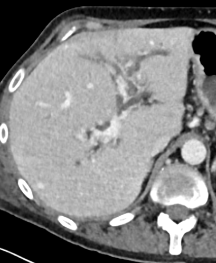 Non-cirrhotic hepatic dysmorphia
- Hepatic steatosis – advanced level
- Other hepatic storage diseases (beyond steatosis)
- Vascular liver diseases - clinical cases – advanced level
- Benign liver tumors – advanced level
- Rare liver tumors
- Hepatic pseudotumors
- Cholangiocarcinoma – advanced level
- Liver metastases – advanced level
- Hepatic capsule diseases
- Post–liver transplantation imaging findings
- How to use hepatospecific contrast agents – advanced level
- Contrast-enhanced liver ultrasound
- Ultrasound elastography
- MRI elastography
- Role of spectral CT in hepatobiliary diseases
- Indications for PET-MRI in abdominal diseases
- Live interactive clinical case session
Module 2: Pancreas
Module coordinator : Prof. Mathilde Wagner
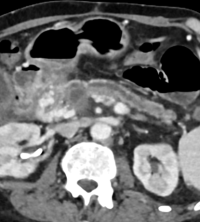 Pancreatic anatomical variants and related complications
- Rare solid pancreatic tumors
- Rare cystic pancreatic tumors
- Cystic pancreatic tumors: practical approach
- Restaging after neoadjuvant treatment for pancreatic cancer
- Metabolic imaging of pancreatic neuroendocrine tumors
- Advanced pancreatitis: atypical presentations and diagnostic pitfalls
- Live interactive clinical case session
Module 3: Spleen, Peritoneum, Lymphatic System, Wall pathologies
Module coordinator : Prof. Christine Hoeffel
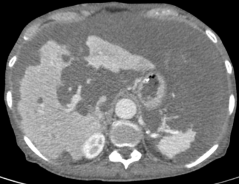 Advanced peritoneal anatomy
- High-risk anatomical variants
- Lymphatic diseases of the trunk
- Uncommon peritoneal lesions
- Diffusion and perfusion imaging in oncology; whole-body MRI: indications in abdominal pathology
- Aeric pitfalls in abdominal imaging
- Diaphragmatic diseases
- Live interactive clinical case session
Module 4: Emergency and Trauma
Module coordinator : Prof. Ingrid Millet
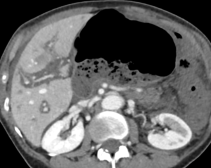 Rare traumatic injuries (blunt and penetrating)
- Rare non-traumatic diseases of the digestive tract
- Differential diagnoses of digestive emergencies
- Internal hernias
- Post–interventional radiology emergencies
- Acute esophageal condition
- Live interactive clinical case session
Module 5: Digestive Tract
Module coordinator : Prof. Céline Savoye-Collet
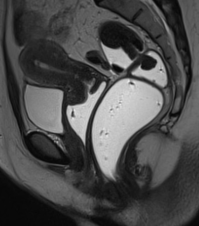 Chronic inflammatory bowel diseases – level 2
- Anoperineal fistulas – level 2
- Postoperative imaging of the gastrointestinal tract, after and outside bariatric surgery – level 2
- Colonic tumors – level 2
- Post-therapeutic imaging of rectal cancer
- Anal canal cancer
- Specific features of digestive neuroendocrine tumors
- Pelvic space lesions
- Pelvic floor disorders
- Live interactive clinical case session
Module 6: Interventional Radiology
Module coordinator : Prof. Jean-Pierre Tasu
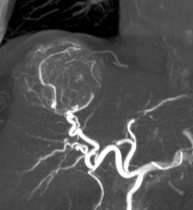 Indications for radiology treatments of hepatic tumors in cirrhotic patients
- Indications for radiology treatments of liver metastases
- Indications and follow-up of radiology treatments for portal hypertension and portal vein thrombosis
- Role of interventional imaging in abdominal trauma
- Indications and follow-up of interventional radiology treatments for biliary and pancreatic diseases
- Interventional radiology and hepatic surgery: how to support the surgeon
- Post-SIRT and post-CEL imaging
- Indications for treatment of necrotizing acute pancreatitis
- Imaging of endoscopic treatments and combined therapies
- Live interactive clinical case session
Module 7: Updates and Recommendations
Module coordinator : Prof. Maxime Ronot
 AI and radiomics : what’s new in clinical practice ?
- How to stay up-to-date ?
- Key diagnostic studies not to be missed in recent years
- Key interventional studies not to be missed in the past two years
- New technology monitoring
- Abdominal Imaging and pregnancy
Admission requirements
Radiologists and Fellowship (CV, covering letter and copy of your diploma)
Applications from May 1st to July 10th
Tuition fees
740 € (+ university fees - 178€ in 2025)
Contact(s)
Composante(s)
Formation continue en santé
Contacts
28 rue Roger Amsler
49045 ANGERS FRANCE
Plus d'infos
Langue(s) d'enseignement Anglais
:
À télécharger
 DIU_Hepatobiliary_gastrointestinal_imaging_expert_.pdf (514 Ko)
